“Ceramide” is one of the most name-dropped words in skincare right now. This article is about what the word actually means, checked against real barrier research, not just what it's come to imply on a label.
Skin that feels tight after cleansing, flakes in patches, stings when you apply something that never used to sting: that's usually a barrier problem before it's anything else. Ceramides are one of the main things standing between “barrier intact” and “barrier struggling,” and understanding what they actually do makes it much easier to tell a genuinely barrier-supporting product from one that's just using the word.

What ceramides actually are, structurally
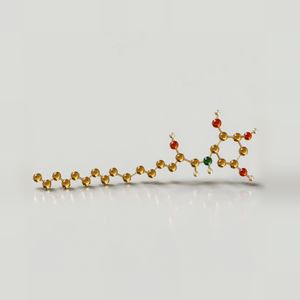
Ceramides are a family of lipids (fats) that sit in the spaces between the cells of your stratum corneum, the outermost layer of skin. The standard way dermatology describes this is “bricks and mortar”: corneocytes (flattened, dead skin cells) are the bricks, and a matrix of lipids arranged in layered sheets is the mortar holding them together and sealing the gaps between them. Ceramides are the major component of that mortar: analysis of human skin puts them at roughly 30 to 40 per cent of the stratum corneum's lipids by weight, and together with cholesterol and fatty acids they form the layered sheets responsible for the barrier. A review from Leiden University by van Smeden and Bouwstra, drawing on studies of human skin, describes those three lipid classes, ceramides, cholesterol and free fatty acids, as dominating the matrix, packed into dense, stacked layers whose organisation depends on the exact lipid composition. That composition isn't incidental: in the skin of people with atopic dermatitis, changes in these lipids alter how the layers are organised and go hand in hand with a weaker barrier, the kind of change researchers can directly quantify by measuring transepidermal water loss (TEWL) through the skin.
That's the whole mechanism, in plain terms: ceramides help the barrier hold moisture in and keep everyday irritants and allergens out, by physically maintaining an ordered lipid structure between skin cells rather than by any active biological signalling. They're structural, not a triggered response, which is exactly why barrier support tends to feel undramatic and shows up as “skin that just copes better,” rather than a visible transformation you can point to in a before-and-after photo.
How ceramide types are classified
"Ceramide" on an ingredient list is a category name, not a single molecule. Skin naturally contains more than a dozen distinct ceramide subtypes, and dermatology classifies them using a shorthand system based on their chemical backbone and the fatty acid attached to it. A 2025 study of skin ceramides by researchers in Germany and the Czech Republic (Brezesinski and colleagues, published in Langmuir) sets out this naming convention: the first letter describes the fatty acid, such as N (non-hydroxy) or A (alpha-hydroxy), and the second describes the backbone, such as S (sphingosine), P (phytosphingosine) or dS (dihydrosphingosine), giving names like ceramide NP or ceramide AP. The same paper notes that 21 subclasses of free ceramides have been described in human stratum corneum, with ceramide NP and ceramide AP among the most abundant, each a structurally distinct lipid.
This naming system describes the specific, skin-identical lipids found in human stratum corneum. Our own Ceramide Cocoon Night Cream is built on a plant-derived complex of glycosphingolipids and glycolipids, a related but structurally different lipid family, not an exact match to any single named ceramide subtype above. That's a distinction worth being precise about rather than glossing over: a plant-derived lipid complex can still support the same barrier matrix described earlier in this article, but it isn't chemically identical to, say, ceramide NP as it exists in human skin, and a product doesn't need to claim otherwise to do real, useful barrier work.
Why levels drop, and what that looks like
A weakened barrier shows up in familiar ways: tightness after cleansing that doesn't ease, flaking or rough patches, stinging when you apply products that never used to bother you, and skin that seems to react to everything at once. Ceramide levels in the stratum corneum decline with age, and can also be depleted faster than they'd naturally decline by over-cleansing with harsh surfactants, over-exfoliating, cold dry weather, indoor heating, and (relevantly, if you're also using a retinoid or an acid exfoliant) by ingredients that deliberately speed up exfoliation. Retinoids and AHAs like glycolic acid speed up the shedding of surface cells. That's how they work, but it can leave skin feeling drier and more reactive while it adjusts, which is where a comforting, lipid-rich night cream earns its place.
This is where the two ingredients genuinely interact, rather than just coexisting in a routine: dermatologists commonly describe a “moisturiser sandwich” technique, applying a ceramide-rich moisturiser before and after a retinoid or acid, rather than only after, to help skin stay comfortable while it gets used to them; it may soften the active's effect a little, which is often a fair trade. If you're introducing bakuchiol or retinol (see our bakuchiol vs retinol comparison) or a glycolic acid toner (see our glycolic acid guide) and finding your skin more reactive than expected, a ceramide-based night cream is a reasonable first thing to add back in, alongside using the active a little less often.
Where ceramides live in the Enrichment range

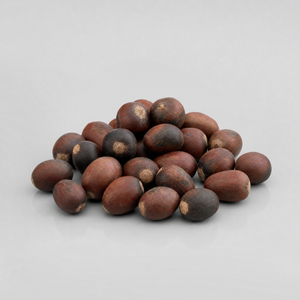
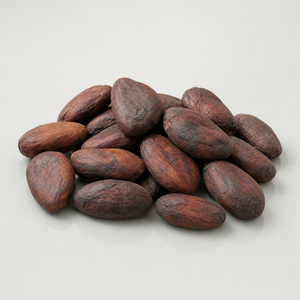
Our Ceramide Cocoon Night Cream is built around a plant-derived complex of glycosphingolipids and glycolipids (the lipid family ceramides belong to), alongside shea butter, cocoa butter, and sodium hyaluronate. Its ingredient list names these plant lipids precisely, as glycosphingolipids and glycolipids. It's made for skin that feels dry or tight, applied as the last step of an evening routine. If your skin is sensitive, we'd always suggest a patch test first.
If you wear SPF during the day, our Ceramide CC Stick SPF30 uses the same family of plant-derived ceramide lipids inside a broad-spectrum mineral sunscreen. It's worth reading alongside our guide to what sunscreen actually does if barrier support and sun protection are both on your list. You can see everything built around this ingredient family in our ceramide collection.
What separates a well-formulated ceramide product from a token amount
Ceramides work as part of a team, not in isolation, which has a direct, practical implication for judging a product. In the skin's own barrier, ceramides sit alongside cholesterol and free fatty acids, which is why well-made barrier creams pair ceramide-type lipids with other skin-friendly fats rather than relying on one ingredient alone.
In practice, a product's ceramide content is only part of the story; what it's combined with matters just as much. Our Ceramide Cocoon Night Cream pairs its plant-derived ceramide-family lipids with shea butter and cocoa butter, both of which supply fatty-acid and lipid content that supports the same layered structure described above, rather than relying on the ceramide-family ingredient alone to do all the work.
What ceramides won't do
Topical ceramides support the outer barrier's lipid structure; they don't change how many ceramides your skin produces on its own, and they won't resolve a diagnosed skin condition on their own. That needs a dermatologist's input, not just a richer moisturiser. What a well-formulated ceramide product realistically does is support the mechanical structure described above, consistently, for as long as you use it, which is a genuinely useful, evidence-grounded thing for a night cream to do, without needing to be dressed up as more than that.
Sources
- van Smeden J, Bouwstra JA. “Stratum Corneum Lipids: Their Role for the Skin Barrier Function in Healthy Subjects and Atopic Dermatitis Patients.” Current Problems in Dermatology, 2016; 49: 8–26.
- Hamanaka S, Hara M, Nishio H, Otsuka F, Suzuki A, Uchida Y. “Human epidermal glucosylceramides are major precursors of stratum corneum ceramides.” Journal of Investigative Dermatology, 2002; 119(2): 416–423.
- Brezesinski G, Opálka L, Shen C, Groetzsch C, Schneck E, Eichner A. “Structure–Function Relationship of the Most Abundant Ceramide Subspecies Studied on Monolayer Models Using GIXD and Langmuir Isotherms.” Langmuir, 2025; 41(22): 14255–14264.
This article is educational and doesn't replace medical advice. Persistent barrier symptoms (ongoing pain, weeping, or signs of infection) are a reason to see a dermatologist, not just switch moisturisers.
The short version
Ceramides aren't a dramatic active. They're structural. Here's what they actually do in the skin barrier, why levels drop, and how to tell real barrier support from a label buzzword.
Related ingredients