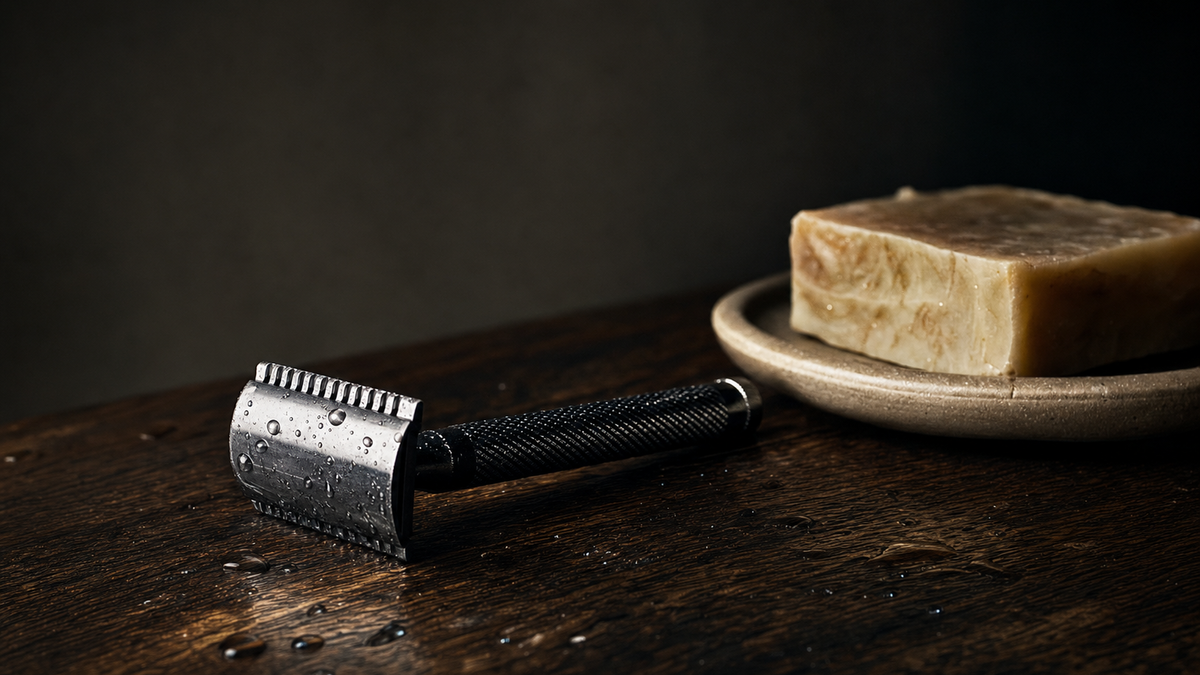
Most men who don't have a skincare routine aren't opposed to the idea. They just don't want another multi-step regime added to a morning that's already tight. That's a reasonable position. The good news is that skin doesn't need seven products to stay healthy; it needs a small number of things done consistently. Here's what actually matters, in the order it matters.
Why bother at all
Skin is skin, regardless of who it's on, but a few things are more common in a typical male routine that make a minimal skincare step worth adding rather than skipping. Daily or near-daily shaving is mechanically abrasive: a blade dragging across the face several times a week disrupts the same outer barrier that skincare is trying to support, which is why post-shave tightness, redness, and razor burn are so common. Skin exposed to that kind of regular mechanical stress benefits more, not less, from something simple to help it recover.
Shaving is doing more damage than you think
A few small changes to how you shave matter more than any product you put on afterwards. The American Academy of Dermatology's public guidance is specific here: shave in the direction the hair grows, not against it, since shaving against the grain is what drives most ingrown hairs and razor bumps. Warming the skin first (at the end of a shower, or with a damp warm washcloth) softens the hairs and makes them easier to cut cleanly, and a sharp blade cuts with less friction than one that's gone dull. Blade life varies with your hair, the blade and how often you shave, so follow the manufacturer's guidance and replace a blade that feels dull or is damaged. None of this costs anything extra; it's technique, not product, and it does more to keep irritation down than whatever you apply afterwards.
The three things that actually matter
Cleanse. Just enough to remove the day's sweat, oil, and grime before it sits on skin overnight. A gentle, non-stripping cleanser or even a thorough rinse with warm water is enough for most people. The mistake worth avoiding is reaching for a bar soap built for hands and body on your face; those are formulated for a much higher pH than facial skin is comfortable with, and repeated use tends to leave skin feeling tighter and drier than it should.
Moisturise, especially after shaving. This is a simple step that takes very little effort. A moisturiser built around ceramides (one of the lipid families found in the skin's outer barrier) is a sensible default after shaving. Our Ceramide Cocoon Night Cream is formulated around a plant-derived complex of glycosphingolipids and glycolipids alongside shea and cocoa butter; applied after cleansing (and after shaving, once any nicks have settled), it's a simple way to keep skin feeling comfortable after shaving.
SPF, every day skin is out in daylight. This is the step most routines, male or female, skip entirely, and it's the one with the clearest evidence behind it for long-term skin health (more on that in our guide to what sunscreen actually does, including why "I'm indoors most of the day" doesn't get you off the hook). It doesn't need to be complicated: our Sun Protect Tinted Fluid SPF30 is a mineral SPF30 with a sheer, skin-toned tint, and it works on its own if that's the only step you're doing that day. If a tinted finish isn't what you're after, any broad-spectrum SPF30 you'll actually use every day is better than a "better" one you leave in the drawer.
What to add only if you actually need it
If your skin runs oily or shine is your main bugbear, a lightweight oil-balancing step can be worth adding on top of the basics above. Niacinamide is the ingredient most commonly used for this: a controlled study of topical 2% niacinamide found it measurably reduced facial sebum output over several weeks of use (Draelos et al., 2006). Our Illuminating Niacinamide Gel is built around it: a weightless gel formulated to balance oil, refine the look of pores, and even out tone. So if oil control is your main concern, that's worth adding on top of the cleanse-and-moisturise basics above rather than replacing them.
If you have a beard
Facial hair changes the routine slightly rather than removing the need for one. Skin under a beard still sheds oil and dead skin the same as anywhere else, but the hair traps both against the skin instead of letting them clear away, which is part of why dry, flaky skin at the beard's edges and irritation underneath longer facial hair are common. Cleansing still matters (working a gentle cleanser down to the skin itself, not just over the surface of the hair), and a lightweight oil worked into both the beard and the skin underneath addresses dryness in both places at once rather than handling them separately.
Dealing with an ingrown hair you already have
Avoiding ingrown hairs in the first place is the better strategy, but if one's already there, picking or digging at it tends to make things worse: broken skin, more inflammation, and a higher chance of marking than the ingrown hair itself would have caused. A warm compress held against the area can help soften skin and encourage the hair to work its way out on its own; a mild exfoliating step a few times a week, not daily and not immediately after shaving over the affected area, can help clear the dead skin trapping it. Anything that looks infected (spreading redness, warmth, or pus) is worth a visit to a doctor rather than continued home care.
Rounding out the routine
If the Ceramide Cocoon Night Cream isn't quite the right texture for your skin, we carry alternatives built for the same job. Jojoba Endurance Day Cream pairs hyaluronic acid with bisabolol in a lighter, fast-absorbing formula that suits a quick routine. If your skin runs oilier, Zinc Shine Control Facial Gel does the same balancing job as a weightless gel instead of a cream, using zinc alongside hyaluronic acid. And in the shower, Vetiver Purifying Hair & Body Wash is the one-step option: wheat protein conditions hair while it softens skin, so there's no need to reach for two separate products.
If you're looking for somewhere to start today, the Ceramide Cocoon Night Cream is a simple place to start, and it takes about ten seconds to apply.
Sources
The short version
A minimal three-step routine built on what matters most: good shaving technique, a comfortable moisturiser and daily SPF.
Related ingredients