


Order isn't a formality. A thoughtful sequence helps each product sit where it should and feel its best on skin. Here's the actual logic behind morning skincare order, not just the list.
The standard advice (cleanse, tone, target, moisturise, protect) gets repeated so often it can start to sound like tradition rather than reasoning. It's reasoning. The order follows two simple, practical rules: water-based and thinner formulas go on before oil-based and thicker ones, so a heavy cream doesn't sit on top of skin and block a lighter serum from absorbing underneath it; and whatever you most need to work should go on skin while it's cleanest and most receptive, not after it's already layered with other things.

The morning order, step by step
Cleanse. Even a quick rinse or gentle wash clears overnight oil buildup and whatever your moisturiser left behind, giving the rest of the routine a clean surface to work on.
Toner (optional). If you use one, this is where it goes: a thin, fast-absorbing layer that preps skin before anything heavier. Not every toner suits a morning slot, though: our own Brightening Glycolic Acid Toner is an exfoliating acid formula we specifically recommend for evening use, since it increases photosensitivity (more on that in our evening routine guide). A hydrating, non-exfoliating toner is the better morning choice if you want this step.
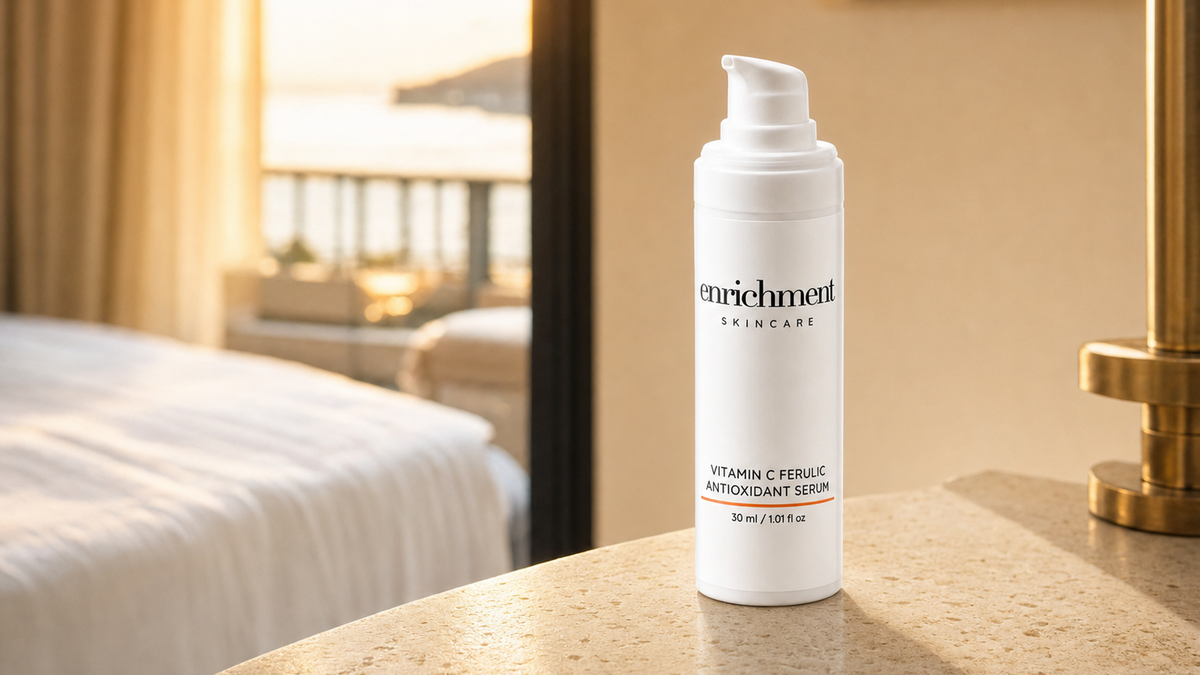
Serum. This is the step to spend your money on, because a serum carries a concentrated dose of a specific active in a form designed to absorb rather than sit on the surface. Antioxidant serums are a common and genuinely well-reasoned morning choice: vitamin C in particular has real, longstanding research behind its role in protecting skin against the cumulative effects of daily UV and environmental exposure, laid out in a 2017 clinical review in the Journal of Clinical and Aesthetic Dermatology (Al-Niaimi & Chiang). Our own Hexapeptide Smoothing Serum takes a different approach for the same morning slot (Hexapeptide-11 alongside hyaluronic acid, for a smoother, more hydrated look rather than brightening) and is suited to skin that wants that particular benefit rather than an antioxidant-first formula. Either way, the principle is the same: serum goes on cleansed, bare skin, before moisturiser.
Moisturiser. Applied after your serum has had a minute to absorb, moisturiser locks that hydration in and finishes prepping skin for the final step.
SPF: always last, always non-negotiable. Sunscreen needs to sit on top of everything else to form an even protective layer; layering a moisturiser over it, or mixing the two, dilutes and disrupts that layer right when you need it intact. A randomised trial in Australia (Hughes et al., published in Annals of Internal Medicine in 2013) followed 903 adults for four and a half years and found that skin aged 24% less in those who applied a broad-spectrum sunscreen every day than in those who used it only when they chose to, one of the few skincare claims with genuinely long-run, comparative evidence behind it. Our Sun Protect Tinted Fluid SPF30 is built as that final step: mineral, zinc-oxide-based, with hyaluronic acid so it doesn't finish the routine on a dry note.
Why "thinnest to thickest" actually works
A thick cream applied before a lightweight serum acts as a barrier the serum then has to fight through, which means less of it actually reaches skin. Going lightest to heaviest lets each layer absorb before the next one arrives, so nothing gets blocked out by something applied too early. It's the same reason giving each step 30 to 60 seconds before the next one helps: not a pause for its own sake, just enough time for the previous layer to stop sitting on the surface.
If your products are "pilling," this is usually why
Pilling (where product visibly rolls or balls up on the skin instead of absorbing) is one of the most common morning-routine complaints, and it's almost always a sequencing or timing problem rather than a sign a product is faulty. It typically happens when a new layer is applied before the previous one has actually absorbed, or when a silicone-heavy formula (common in some primers and sunscreens) is layered over a product with a very different texture. The fix is rarely a different product: give each step slightly longer before the next, apply thinner amounts per layer rather than one thick layer, and pat products in rather than rubbing vigorously, which can physically roll partially-absorbed product back off the surface.
Where an eye cream fits, if you use one
Eye cream is genuinely optional, but if you use one, it goes before your serum rather than after. The skin around the eyes is thinner and more delicate, so a targeted product designed for it goes on first, letting a stronger active serum be applied around it afterwards without it migrating into the eye area. It's a small sequencing detail, but applying it in the wrong order can mean a potent serum ends up somewhere it wasn't formulated for.
What if you don't do all five steps?
You don't have to. The two steps in this list that matter regardless of how minimal you keep things are cleanser and SPF; an active serum and toner are genuine additions once you know what you want them to do, not requirements for a "real" morning routine. If you're building a routine from nothing, our guide to starting from scratch covers the true basics before you worry about order at all.
The short version
Morning order isn't arbitrary. It's thinnest-to-thickest so nothing gets blocked, and most-important-active-first so it reaches skin while it's cleanest. Get cleanser, a serum step suited to what you actually want, and SPF right, in that relative order, and you've covered what the sequence is actually protecting.
Sources
- Al-Niaimi F, Chiang NYZ. “Topical Vitamin C and the Skin: Mechanisms of Action and Clinical Applications.” Journal of Clinical and Aesthetic Dermatology, 2017; 10(7): 14–17.
- Hughes MCB, Williams GM, Baker P, Green AC. "Sunscreen and Prevention of Skin Aging: A Randomized Trial." Annals of Internal Medicine, 2013; 158(11): 781–790.
This article is educational and doesn't replace medical advice. If you have a diagnosed skin condition, check with a dermatologist before introducing new actives to your morning routine.
The short version
Skincare order isn't tradition. It's thinnest-to-thickest layering and getting your most important active onto clean skin first. Here's the actual logic behind a morning routine.
Related ingredients


