


Kojic acid doesn't get talked about as often as vitamin C or niacinamide, but it's one of the longer-standing, better-mechanistically-understood ingredients for dark spots specifically. Here's how it actually works, and what a realistic timeline looks like.
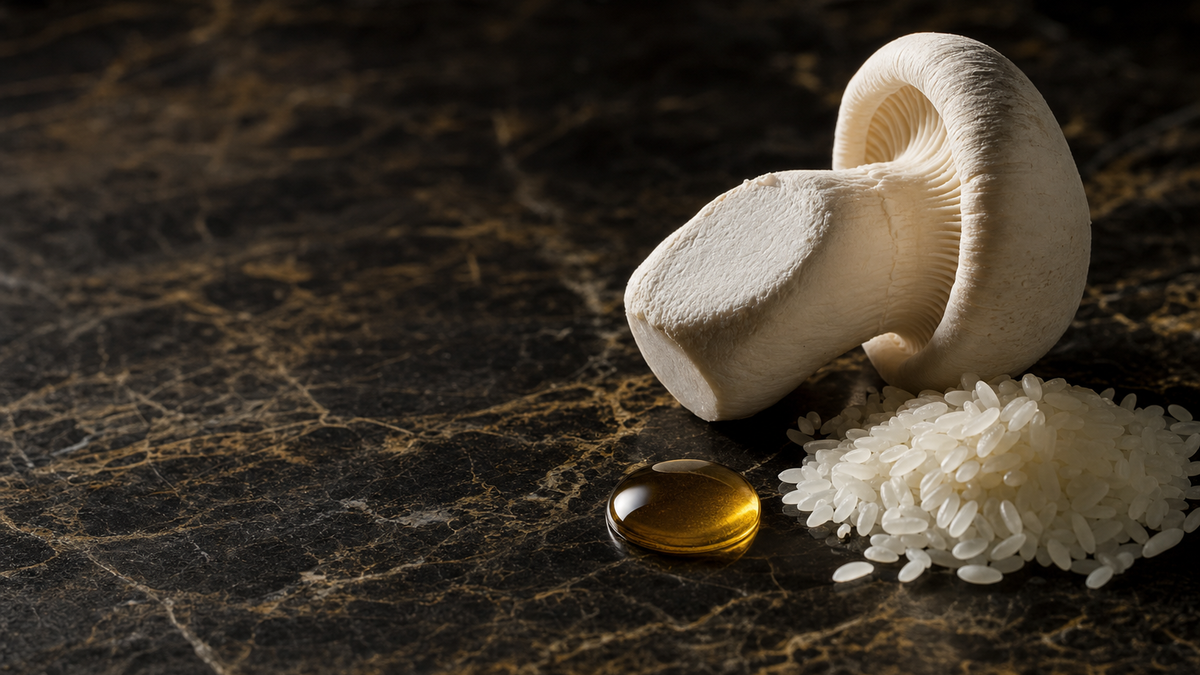
Kojic acid is a natural compound produced by certain fungi during the fermentation process, the same broad family of processes used in soy sauce and rice wine production, which is where it was first identified. In skincare, it's used specifically for one job: interrupting excess melanin production in areas of dark spots, sun spots, and post-blemish marks.
How it actually works
Melanin (the pigment responsible for skin tone and, in excess or uneven concentration, dark spots) is produced through a chemical process that depends on an enzyme called tyrosinase. Kojic acid works by inhibiting tyrosinase activity, which slows new melanin production at the source rather than physically removing pigment that's already there. Kojic acid works on this pathway by binding the copper ion that tyrosinase needs in order to work, which is a well-established mechanism in cosmetic chemistry. In UK and EU skincare, kojic acid is used at up to 1%, in face and hand products.
Because it works on new pigment rather than what's already there, kojic acid is a gradual ingredient, not a quick fix. Expect to use it consistently for a few months, with daily SPF, before judging how your dark spots look.
The trade-off worth knowing about
Some people find kojic acid mildly irritating, particularly on first use and on already-reactive skin, so introducing it gradually (a few times a week before moving to daily use) is the sensible approach rather than starting at full frequency. Daily sun protection matters whenever you're working on dark spots, because UV exposure is one of the main drivers of the excess melanin production you're trying to calm down in the first place, and using a tyrosinase inhibitor without consistent sun protection works directly against the point of using it.
Kojic acid vs. kojic dipalmitate
Kojic dipalmitate is a modified, fat-soluble version of kojic acid (kojic acid bonded to palmitic acid), developed specifically to address the irritation and stability issues that can come with kojic acid itself. It’s generally considered gentler and more stable in a finished formula, though the trade-off is a smaller body of independent clinical research behind it than kojic acid in its original form, and some evidence suggests it may be a less potent tyrosinase inhibitor at equivalent concentrations. If a product lists kojic dipalmitate rather than kojic acid, it isn’t a weaker imitation exactly. It’s a deliberate formulation choice trading some potency for better tolerability, which can be the right trade-off for more reactive skin.
How it compares to other brightening ingredients
Kojic acid sits alongside ingredients such as alpha-arbutin and vitamin C derivatives, which each work on the look of uneven tone in slightly different ways. They aren't interchangeable, and many people find pairing one with gentle exfoliation works well. It's also naturally derived from fermentation rather than synthesised, which matters to some people's ingredient preferences, though that's a sourcing distinction rather than an efficacy one.
Where kojic acid lives in the Enrichment range
Kojic acid is a genuinely well-evidenced brightening ingredient, and it's in the Enrichment range across three formats: our Kojic Acid Illuminating Serum as a leave-on serum, our Kojic Acid Illuminating Cream for daily moisturising, and our Kojic Acid Face & Hand Polish for the exfoliating side of brightening. If you want to pair it with a different mechanism, our Brightening Glycolic Acid Toner is an exfoliating acid, a different kind of ingredient from a tyrosinase inhibitor, if you want to pair different approaches (introduce one at a time).
Introducing it without overdoing it
Start with every-other-day use for the first couple of weeks rather than committing straight to daily application, particularly if you're also using another active ingredient like an exfoliating acid or a retinoid. Layering multiple actives that can each irritate skin on the same night compounds the irritation risk without necessarily compounding the benefit. The more sustainable approach is usually one clear active focus per evening, built up gradually, rather than stacking everything at once and hoping skin keeps up.
What a realistic timeline looks like
Given the mechanism above, expect kojic acid to be a routine addition you commit to for the medium term rather than a quick fix: consistent daily use as directed on the product, with SPF every morning, judged over months rather than weeks. If you're dealing with broader, less targeted unevenness rather than distinct spots, our hyperpigmentation guide covers the fuller picture, including where daily sun protection fits alongside brightening ingredients.
See the full Hyperpigmentation & Dark Spots concern guide in our Skin Concern Guides →
Sources
This article is educational and doesn't replace medical advice. If you have a diagnosed skin condition or are pregnant or breastfeeding, check with your dermatologist before introducing a new active ingredient.
The short version
How kojic acid helps even the look of dark spots, how to introduce it gently, and a realistic timeline for results.
Related ingredients


